4409

Adafruit
485-4409
4409

Herst.:

Beschreibung:
Adafruit Zubehör Adafruit STEMMA Non-Latching Mini Relay - JST PH 2mm

ECAD Model:
Den kostenlosen Library Loader herunterladen, um diese Datei für Ihr ECAD Tool zu konvertieren. Weitere Infos zu ECAD-Modell.

Auf Lager: 43

Lagerbestand:
43 sofort lieferbar
Lieferzeit ab Hersteller:
1 Woche Geschätzte Produktionszeit des Werks für Mengen, die größer als angezeigt sind.
Minimum: 1   Vielfache: 1
Stückpreis:
CHF -.--
Erw. Preis:
CHF -.--
Vorauss. Zolltarif:

Preis (CHF)

Menge Stückpreis
Erw. Preis
CHF 5.63 CHF 5.63

Produktattribut Attributwert Attribut auswählen
Adafruit
Produktkategorie: Adafruit Zubehör
RoHS:  
Accessories
STEMMA Non-Latching Mini Relay
Marke: Adafruit
Beschreibung/Funktion: STEMMA Non-Latching Mini Relay
Produkt-Typ: Accessories
Serie: STEMMA
Verpackung ab Werk: 1
Unterkategorie: Supplies
Produkte gefunden:
Um ähnliche Produkte anzuzeigen, wählen Sie mindestens ein Kontrollkästchen aus
Um ähnliche Produkte in dieser Kategorie anzuzeigen, wählen Sie mindestens ein Kontrollkästchen oben aus.
Ausgewählte Attribute: 0

USHTS:
8536410020
ECCN:
EAR99

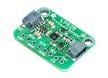
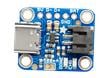
STEMMA Non-Latching Mini Relay Breakout Board

Adafruit STEMMA Non-Latching Mini Relay Breakout Board gives the user the power to control and control over power. The board allows the user to turn on and off lamps, fans, solenoids, and other small appliances that run on up to 250VAC or DC power using any microcontroller or microcomputer. There is no worrying about flyback diodes, level shifting, or pin protection, as the STEMMA board takes care of that automatically. This board can be used with any 3V or 5V microcontroller/microcomputer. To use it with a breadboard, Raspberry Pi or Arduino, pair it with a JST 3-pin to breadboard cable. If the user wants to use it with a Circuit Playground or micro:bit, there is a cable with alligator clips available. Each STEMMA board comes with a fully assembled and tested PCB but no cable. No soldering is required to use it. There's an optional second switch on the side of the PCB. If the user gets a 3-pin terminal block you can solder that in place, but it is optional.