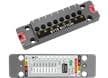
U215

M5Stack
170-U215
U215

Herst.:

Beschreibung:
Eingabegeräte CardKB2 Keyboard Unit (ESP32 C61)

Lebenszyklus:
Neues Produkt:
Neu von diesem Hersteller.
ECAD Model:
Den kostenlosen Library Loader herunterladen, um diese Datei für Ihr ECAD Tool zu konvertieren. Weitere Infos zu ECAD-Modell.

Verfügbarkeit

Lagerbestand:
0

Sie können dieses Produkt immer noch nachbestellen.

Auf Bestellung:
22
erwartet ab 27.05.2026
Lieferzeit ab Hersteller:
5
Wochen Geschätzte Produktionszeit des Werks für Mengen, die größer als angezeigt sind.
Minimum: 1   Vielfache: 1
Stückpreis:
-.-- CHF
Erw. Preis:
-.-- CHF
Vorauss. Zolltarif:

Preis (CHF)

Menge Stückpreis
Erw. Preis
7.89 CHF 7.89 CHF

Produktattribut Attributwert Attribut auswählen
M5Stack
Produktkategorie: Eingabegeräte
RoHS:  
Keyboard Input Unit
Marke: M5Stack
Produkt-Typ: Input Devices
Unterkategorie: Input Devices
Nennspannung: 5 V
Gewicht pro Stück: 29 g
Produkte gefunden:
Um ähnliche Produkte anzuzeigen, wählen Sie mindestens ein Kontrollkästchen aus
Um ähnliche Produkte in dieser Kategorie anzuzeigen, wählen Sie mindestens ein Kontrollkästchen oben aus.
Ausgewählte Attribute: 0

Konformitätscodes
CAHTS:
8471600050
USHTS:
8471602000
JPHTS:
847160000
TARIC:
8471606000
MXHTS:
8471600499
BRHTS:
84716052
ECCN:
EAR99
Ursprungsklassifikationen
Ursprungsland:
China
Herstellungsland:
Nicht lieferbar
Land der Verbreitung:
Nicht lieferbar
Zum Zeitpunkt der Lieferung kann sich das Land ändern.

Unit CardKB2 Keyboard Input Device

M5Stack Unit CardKB2 Keyboard Input Device is a card-sized 42-key portable keyboard input unit and equipped with ESP32-C61HF4 System-on-Chip (SoC). This device supports 2.4GHz Wi-Fi 6/BLE wireless communication and reserved M2 mounting holes for easy integration into applications. The unit CardKB2 features an onboard HY2.0-4P connector that enables communication in I2C/UART mode, while a USB Type-C® port provides power supply and firmware flashing. This compact and lightweight device is ideal for everyday carry and embedded integration. Additional features include an RGB LED status indicator, a reset button, a boot button, and built-in input overvoltage protection. Typical applications include text input for portable devices, HMI in embedded systems, wireless control terminals for IoT devices, and educational programming and maker projects.